

By Isabella Carlson
Home Values: Modest Growth Amid Market Changes
In Burnsville, the typical single-family home is selling for about $369,000, rising roughly 2.4% over the past year. Homes are going into pending status in about 25 days, showing a steady—but not overheated—market. Median listing prices hover near $360,000, and sales often match list prices.
However, growth isn’t uniform. While median sale prices have held relatively steady, price per square foot has climbed around 3–4%, suggesting buyers may be seeking features like updates, larger lots, or premium finishes within existing homes.
Rentals: What Move-Ins Are Facing
The average rent for apartments in Burnsville ranges between $1,500 and $1,700 depending on bedroom count. Studios run around $1,300-$1,400, while three-bedroom units frequently top $1,900.
Trends over the past 12 months show slight declines or stagnation for many larger units. For example, three-bedroom apartments have dropped year-over-year even after recent month-to-month increases. Condos and single-family rentals tend to command a premium and are seeing stronger rent growth especially in desirable areas.
Inventory, Market Speed & Buyer Leverage
Buyers are seeing more options: active for-sale homes have increased about 38% year-over-year. However, homes are spending slightly longer on market—around 36 days—giving both sides room to negotiate. Despite this, about 46–47% of sales go over asking price, so highly desirable properties still face competition.
Development & The Burnsville Center Village Vision
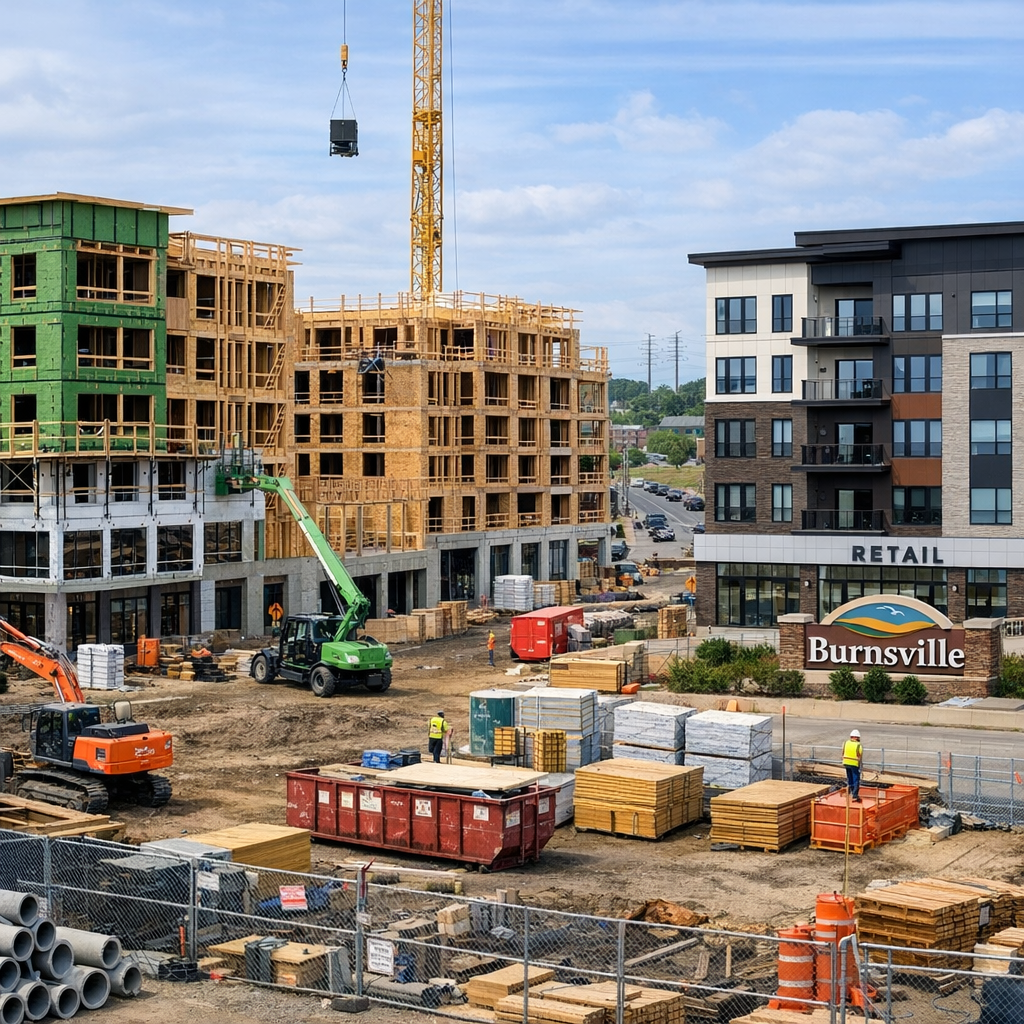
One of the biggest ongoing changes in Burnsville is the Burnsville Center Village redevelopment. The plan aims to revitalize the area north and south of County Road 42 with mixed-use buildings, pedestrian-friendly retail, housing (including condos), green spaces, hotels, and eateries. A new southbound I-35W off ramp has been approved, and legislative moves like a tax-increment financing district are in place to aid development.
Focusing growth in walkable, transit-connected corridors is part of the city’s broader strategy. Burnsville’s Comprehensive Plan highlights infill opportunities and encourages townhomes, apartments, and mixed-use housing—especially near amenities like transit hubs, parks, and retail areas.
What This Means for Different Stakeholders
- For buyers: There’s greater room to negotiate than in a hot market—but homes in attractive locations or with special features still move quickly.
- For renters: Smaller units are more affordable but demand for family-sized rentals remains high. Be ready to act fast in well-situated properties.
- For developers & city planners: The push toward mixed-use, infill, and walkable neighborhoods is strong. Projects aligned with the Center Village vision will likely find political and financial support.
Tips for Prospective Buyers & Renters
Buyers: Compare homes by price per square foot—not just sticker price. Factor in what you may need to upgrade. Be clear on your must-have vs. nice-to-have features.
Renters: Track rent trends by neighborhood and size. Units in mixed-use, amenity-rich areas may cost more upfront but offer lifestyle savings (less driving, more walkability).
Bottom Line
Burnsville’s real estate market is settled in a period of cautious growth. Homebuyers see slower price appreciation, while renters face mixed results depending on unit size and type. As city development projects like Center Village take shape, they are likely to reshape floodgates of demand for housing tied to transit, retail, and mixed-use urban life.